Delving into easy methods to take away rust from forged iron, this course of begins with understanding the chemistry behind rust formation. The formation of rust on forged iron is primarily brought on by the interplay of iron oxide with moisture within the surroundings. It is a important side to understand earlier than trying to take away rust out of your forged iron cookware or equipment. On this article, we’ll delve into varied strategies to take away rust from forged iron, together with conventional approaches, chemical strategies, non-abrasive strategies, and easy methods to restore a forged iron floor after rust removing.
Understanding the extent of rust harm on forged iron and the assorted indicators of rust harm is important in choosing the proper technique for removing. Floor pitting, flaking, and structural weakening are a number of examples of the sorts of harm that may be brought on by rust. The integrity of forged iron cookware and equipment could be considerably compromised if left untreated.
The Chemistry Behind Rust Formation on Forged Iron: How To Take away Rust From Forged Iron
Forged iron is a kind of iron alloy that incorporates a small quantity of carbon. It is generally utilized in cooking utensils, equipment, and different purposes on account of its sturdiness and warmth conductivity. Nevertheless, forged iron is liable to rusting, which might result in flaking, cracking, and even full failure of the fabric.
The Position of Iron Oxide in Rust Formation
Rust formation on forged iron includes the oxidation of iron, ensuing within the formation of iron(III) oxide, also called rust. This course of happens when iron comes into contact with oxygen and moisture within the surroundings. The presence of moisture is essential within the rusting course of, because it permits the iron oxide to kind a protecting layer that continues to catalyze the response within the presence of oxygen.
O2 + 4H+ + 4e- → 2H2O
The above equation represents the oxidation of iron to kind iron(III) oxide. This response requires the presence of oxygen, moisture, and iron ions. When iron comes into contact with these parts, it types a skinny layer of rust, which might proceed to develop and unfold over time.
Comparability with Different Varieties of Corrosion
Whereas rust formation is a basic instance of corrosion, it is important to grasp that it is not the one kind of corrosion that may have an effect on iron and its alloys. Different sorts of corrosion, akin to galvanic corrosion, crevice corrosion, and pitting corrosion, may happen beneath totally different environmental situations.
* Galvanic Corrosion: One of these corrosion happens when two dissimilar metals are in touch with one another within the presence of an electrolyte, akin to saltwater. The metals can trade electrons, resulting in corrosion of the extra reactive metallic.
* For instance, when a iron nail is positioned in touch with copper within the presence of seawater, the copper protects the iron by forming a protecting layer of copper oxide, which prevents additional corrosion.
* Crevice Corrosion: One of these corrosion happens in confined areas, akin to beneath bolts, welds, or different crevices, the place the surroundings will not be in touch with the encompassing air. This results in localized corrosion, which could be significantly extreme in areas with excessive oxygen ranges.
* As an example, corrosion can happen beneath the crevice fashioned by a bolt or nut on a forged iron part, resulting in localized corrosion and potential failure.
* Pitting Corrosion: One of these corrosion happens when small pits kind on the floor of the fabric, usually as a result of presence of an electrolyte and excessive oxygen ranges. Over time, these pits can develop and change into extra vital, resulting in materials failure.
* In forged iron, pitting corrosion can happen as a result of presence of impurities, akin to carbon or silicon, which might result in the formation of pits beneath sure environmental situations.
Significance of Understanding the Chemistry Behind Rust Formation
Understanding the chemistry behind rust formation is essential for creating efficient removing strategies. Figuring out that rust types by means of a chemical response involving iron, oxygen, and moisture helps technicians determine the optimum approaches for eradicating rust and stopping additional formation.
* Chemical Cleansing: Chemical cleansing includes utilizing an answer to dissolve and take away rust. This technique is efficient for removing however requires warning, because the unsuitable cleansing resolution can harm the fabric.
* Mechanical Cleansing: Mechanical cleansing includes utilizing a scrubber, wire brush, or sandpaper to take away rust. This technique is efficient for eradicating flaky rust however could require extra effort and time to take away deeply embedded rust.
In conclusion, understanding the chemistry behind rust formation is important for efficient removing strategies and prevention. By greedy the elemental rules of rust formation and corrosion, technicians can develop methods for sustaining the integrity and longevity of forged iron parts.
Examples of Profitable Rust Elimination Methods
Listed here are some examples of profitable rust removing methods that technicians have used to take care of the integrity and longevity of forged iron parts.
*
Scouring with Baking Soda and Water
This technique is efficient for eradicating small quantities of rust. The baking soda and water combination types a paste that may be utilized to the rusted space and scrubbed away with a smooth brush. This course of helps take away rust with out damaging the fabric.
*
Utilizing a Wire Brush and Sandpaper
This technique includes utilizing a wire brush and sandpaper to wash away rust. The wire brush helps take away flaky rust, whereas the sandpaper helps take away deeper rust layers.
*
Chemical Cleansing with a Vinegar Resolution
This technique includes utilizing a vinegar resolution to dissolve and take away rust. The acidity within the vinegar helps break down the rust, making it simpler to take away.
Assessing the Extent of Rust Injury on Forged Iron

When rust harm happens on forged iron, it may be each visually distressing and structurally weakening. Understanding easy methods to assess the harm is an important step in correctly addressing the problem to make sure that your cookware or equipment stays secure to make use of and performance successfully.
Evaluating the extent of rust harm includes two important sorts of harm: floor pitting and structural weakening.
Floor Pitting
Floor pitting happens when rust accumulates on the floor of the forged iron, creating small holes or pits. One of these harm could be a signal of early put on and tear on the metallic, indicating that the floor is beginning to break down. Floor pitting could be brought on by publicity to moisture, salt, or different corrosive substances.
- Rust can accumulate on the floor of the forged iron, creating small holes or pits.
- Floor pitting could be brought on by publicity to moisture, salt, or different corrosive substances.
- Extended publicity to rust can result in extra intensive harm, together with structural weakening.
The next examples illustrate the extent of floor pitting:
‘Rust pitting on a forged iron cookware floor can result in lowered sturdiness and compromised security.’
As an example, a rusty forged iron pot or pan can develop small holes, which might enable water to build up inside, probably resulting in bacterial development and even inflicting the cookware to interrupt down additional.
Structural Weakening
Structural weakening happens when rust penetrates deeper into the metallic, inflicting it to change into brittle and lose its structural integrity. One of these harm can result in catastrophic failure of the cookware or equipment. Structural weakening is usually more difficult to identify than floor pitting, as it will probably occur beneath the floor.
- Rust can penetrate deeper into the metallic, inflicting it to change into brittle and lose its structural integrity.
- Structural weakening can happen beneath the floor, making it tough to identify early on.
- Extended publicity to rust can result in extra intensive harm, together with floor pitting and structural weakening.
The next picture instance illustrates the extent of structural weakening:
A corroded forged iron engine cylinder with vital structural weakening on account of extended publicity to saltwater and moisture.
On this scenario, the structural weakening compromised the engine’s efficiency, in the end requiring expensive repairs.
Structural weakening can happen in varied elements, together with engine parts, equipment, or cookware. As an example, a corroded forged iron engine cylinder can result in lowered gasoline effectivity and elevated emissions.
Understanding the extent of rust harm is essential to stop additional deterioration and to take the required steps to revive or exchange affected parts.
Conventional Strategies for Eradicating Rust from Forged Iron
Conventional strategies for eradicating rust from forged iron have been used for hundreds of years, with many methods nonetheless employed at present. Regardless of the event of recent strategies, sanding and wire brushing stay two of essentially the most extensively used methods for eradicating rust from forged iron. Nevertheless, these strategies have their very own set of benefits and drawbacks.
Historic Background of Sanding and Wire Brushing
Sanding and wire brushing are two of the oldest strategies used to take away rust from forged iron. The strategy of sanding includes utilizing sandpaper to manually take away the rust, whereas wire brushing makes use of a wire brush to wash away the rust.
Sanding
Sanding is a guide labor-intensive course of that requires endurance and elbow grease. It includes utilizing progressively finer grits of sandpaper to clean out the floor of the forged iron.
Sanding is usually used along side different strategies, akin to energy washing or chemical remedies, to take away robust rust buildup.
Wire Brushing
Wire brushing is one other guide technique used to take away rust from forged iron. A wire brush is used to wash away the rust, usually along side a cleansing product or sandpaper.
Wire brushing is especially efficient for eradicating rust from hard-to-reach areas and enormous surfaces.
Benefits and Disadvantages of Conventional Strategies
Whereas conventional strategies like sanding and wire brushing are nonetheless efficient, in addition they have some disadvantages.
-
Time-consuming: Sanding and wire brushing could be labor-intensive and require plenty of effort and time.
-
Potential security hazards: Guide labor could be bodily demanding and will result in accidents, akin to strained backs, fingers, or fingers.
-
Not efficient for robust rust buildup: Sanding and wire brushing will not be efficient for eradicating robust rust buildup or deep rust penetration.
-
Requires frequent upkeep: Conventional strategies could require frequent upkeep, akin to re-sharpening sandpaper or changing wire brushes.
Comparability with Trendy Strategies
Whereas conventional strategies are nonetheless efficient, fashionable strategies like chemical remedies and energy washing have change into more and more widespread on account of their velocity, ease of use, and effectiveness.
| Methodology | Benefits | Disadvantages |
|---|---|---|
| Sanding and Wire Brushing | Environmentally pleasant, no chemical compounds required | Time-consuming, labor-intensive, potential security hazards |
| Chemical Therapies | Quick and efficient, straightforward to make use of | Might require protecting gear, potential environmental affect |
| Energy Washing | Fast and efficient, straightforward to make use of | Might harm forged iron surfaces, potential security hazards |
Utilizing Chemical Strategies to Take away Rust from Forged Iron
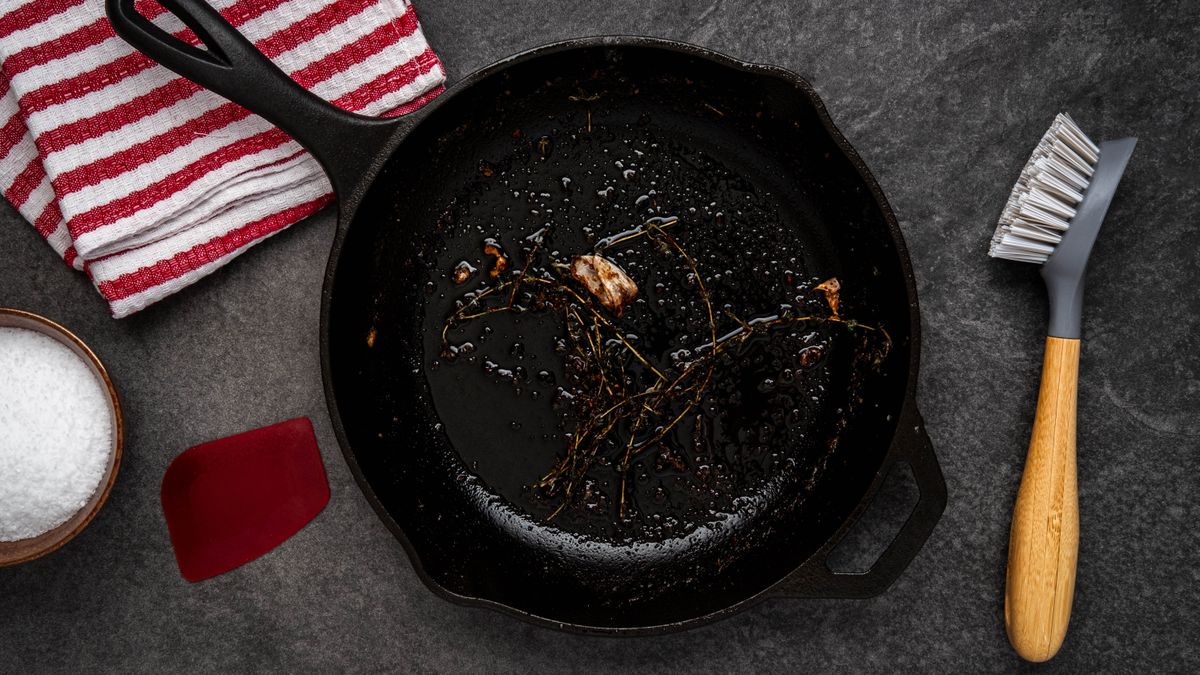
In relation to eradicating rust from forged iron, chemical strategies could be an efficient possibility. Chemical substances like CLR and Naval Jelly are generally used for this function. These chemical compounds work by breaking down the rust and making it simpler to take away.
Chemical strategies contain using robust acids or alkalines to dissolve the rust. CLR, for instance, is a business cleansing resolution that incorporates sodium hydroxide (NaOH) and different components. Naval Jelly, alternatively, is a rust remover that incorporates phosphoric acid (H3PO4) and different substances. These chemical compounds could be utilized to the rusty floor and left to sit down for a time period earlier than being rinsed off.
Chemical Composition of CLR and Naval Jelly
| Chemical | Composition | Software | Instance |
|---|---|---|---|
| CLR | Sodium hydroxide (NaOH), water, and surfactants | Emulsifies and dissolves rust, making it straightforward to rinse off | Beneficial to be used on delicate metal, forged iron, and different metals |
| Naval Jelly | Phosphoric acid (H3PO4), water, and different components | Dissolves rust and leaves a protecting coating | Beneficial to be used on delicate metal, forged iron, and different metals |
Software Procedures and Security Precautions
It’s important to take security precautions when utilizing robust chemical compounds like CLR and Naval Jelly. Listed here are some pointers to observe:
- All the time learn the directions and observe the really helpful utility procedures.
- Put on protecting clothes, together with gloves and security glasses.
- Work in a well-ventilated space to stop inhaling the fumes.
- Keep away from getting the chemical compounds in your pores and skin or in your eyes.
- Neutralize the world with water after utility.
- Eliminate chemical compounds and rags correctly.
Comparability with Non-Chemical Options
Chemical strategies have their benefits and drawbacks in comparison with non-chemical options. Whereas chemical strategies could be quick and efficient, in addition they pose dangers to the person and the surroundings. Non-chemical options like sanding, wire brushing, and baking soda and water paste could be safer and extra environmentally pleasant, however they could require extra effort and time.
Predicted Dangers and Security Precautions
Utilizing robust chemical compounds like CLR and Naval Jelly can pose dangers to the person and the surroundings. These dangers embody:
- Burning or irritation to pores and skin, eyes, and respiratory system
- Injury to surrounding surfaces or gear
- Corrosion to close by metallic parts
To mitigate these dangers, customers should observe the really helpful utility procedures, use correct security gear, and work in well-ventilated areas.
Effectiveness Comparability
Chemical strategies could be extremely efficient for eradicating rust from forged iron, particularly for extreme instances. Nevertheless, the effectiveness of non-chemical options like sanding, wire brushing, and baking soda and water paste depends upon the severity of the rust and the floor preparation.
Generally, chemical strategies are most well-liked for the next conditions:
- Extreme rust buildup
- Massive floor areas
- Troublesome-to-reach areas
Non-chemical options are most well-liked for the next conditions:
- Gentle rust buildup
- Small floor areas
- Preventative upkeep
Restoring a Forged Iron Floor after Rust Elimination
Restoring a forged iron floor after rust removing is an important step in guaranteeing the longevity and efficiency of your cookware. When rust is eliminated, the floor of the forged iron is susceptible to additional harm and may change into brittle, which can result in chipping or cracking.
The Significance of Re-Seasoning Forged Iron
Re-seasoning a forged iron floor is a course of that helps to revive its non-stick properties and defend it from additional harm. The seasoning course of includes making a layer of polymerized oil on the floor of the forged iron, which prevents rust and makes meals launch simpler. Re-seasoning is important after rust removing as a result of it helps to:
* Forestall additional rust formation
* Enhance the non-stick properties of the forged iron
* Defend the floor from scratches and harm
* Improve the general efficiency and longevity of the cookware
Step-by-Step Information to Re-Seasoning Forged Iron
Re-seasoning forged iron is a comparatively easy course of that requires minimal gear. This is a step-by-step information that will help you get began:
- Clear the forged iron floor completely with cleaning soap and water, and dry it fully with a towel.
- Apply a skinny, even layer of oil to the floor of the forged iron utilizing a paper towel or a clear material.
- Place the forged iron within the oven at 350°F (175°C) for an hour to permit the oil to polymerize and kind a tough, non-stick floor.
- After an hour, flip off the oven and let the forged iron cool fully.
- Repeat the method of making use of oil and heating the forged iron within the oven for a number of hours to make sure a radical and even seasoning.
- As soon as the forged iron is absolutely seasoned, wipe off any extra oil with a paper towel and your cookware is able to use.
Advantages of Re-Seasoning Forged Iron
Re-seasoning forged iron presents a number of advantages, together with:
* Improved non-stick properties
* Enhanced cooking efficiency
* Elevated longevity of the cookware
* Simpler meals launch
* Safety from rust and harm
Stopping Future Rust Formation on Forged Iron
Forged iron cookware and equipment are liable to rust formation if not correctly maintained. Improper storage, publicity to moisture, and lack of cleansing can all contribute to the event of rust. To increase the lifespan of your forged iron surfaces, it is important to take preventative measures towards rust formation.
Sustaining a Dry and Clear Setting
A dry and clear surroundings is essential in stopping rust formation on forged iron. Keep away from storing forged iron cookware or equipment in humid or damp areas, as this could speed up the rusting course of. Common cleansing and drying of your forged iron surfaces will help take away any residue or particles that could be contributing to rust formation. It is also important to keep away from immersing forged iron in water or exposing it to excessive temperatures, as this could result in water spots and rust.
- Retailer forged iron cookware or equipment in a dry, well-ventilated space.
- Often clear and dry your forged iron surfaces to stop the buildup of residue and particles.
- Keep away from immersing forged iron in water or exposing it to excessive temperatures.
The Position of Lubricants and Protecting Coatings, The way to take away rust from forged iron
Lubricants and protecting coatings play a big position in stopping rust formation on forged iron. These coatings create a barrier between the forged iron floor and the encompassing surroundings, stopping moisture from penetrating and inflicting rust. Common utility of lubricants may assist to cut back friction and forestall put on and tear in your forged iron surfaces.
- Lubricants akin to cooking oil, flaxseed oil, or silicone spray could be utilized to forged iron surfaces to stop rust formation.
- Protecting coatings akin to wax or varnish may also be utilized to create a barrier between the forged iron floor and the surroundings.
- Common utility of lubricants will help to cut back friction and forestall put on and tear in your forged iron surfaces.
Common Upkeep and Care
Common upkeep and care can go a great distance in stopping rust formation on forged iron. Common cleansing and drying of your forged iron surfaces will help to take away any residue or particles that could be contributing to rust formation. Avoiding excessive temperatures and immersing forged iron in water may assist to stop water spots and rust.
A well-maintained forged iron cookware or equipment can final for many years with correct care and cleansing.
- Often clear and dry your forged iron surfaces to stop the buildup of residue and particles.
- Keep away from immersing forged iron in water or exposing it to excessive temperatures.
-
- For forged iron cookware, season the floor commonly to guard it from rust.
- For forged iron equipment, apply lubricants and protecting coatings as wanted to stop rust.
Last Wrap-Up
Eradicating rust from forged iron requires endurance, consideration to element, and the correct methods. By understanding the chemistry behind rust formation, assessing the extent of injury, and choosing the proper technique for removing, you may be certain that your forged iron cookware or equipment is restored to its authentic situation. Common upkeep and care may even assist forestall future rust formation. With the following pointers and methods, you’ll get pleasure from your forged iron cookware and equipment for years to come back.
FAQ Useful resource
What’s the easiest way to take away rust from a forged iron skillet?
One of the simplest ways to take away rust from a forged iron skillet is by utilizing a mixture of baking soda and vinegar. Apply a combination of equal elements baking soda and water to the rusty space and let it sit for half-hour. Then, combine equal elements vinegar and water and apply it to the world. Let it sit for one more half-hour earlier than scrubbing off the rust with a wire brush.
Can I take advantage of bleach to take away rust from forged iron?
No, don’t use bleach to take away rust from forged iron as it will probably harm the floor and compromise the integrity of the metallic.
How usually ought to I re-season my forged iron cookware after eradicating rust?
After eradicating rust, re-season your forged iron cookware instantly to revive its non-stick properties and forestall additional rust formation.
Can I take advantage of an influence washer to take away rust from forged iron?
No, don’t use an influence washer to take away rust from forged iron as it will probably trigger harm to the floor and compromise the integrity of the metallic.

