How you can sew on a button –
With the right way to sew on a button on the forefront, this information is ready to rework your understanding of stitching a button like a professional. From fundamental ideas to superior strategies, we’ll delve into the world of button stitching, equipping you with the abilities to deal with any restore or customization job that comes your approach.
The method of stitching a button could appear intimidating, however with a strong grasp of the strategies concerned, you may be amazed at how shortly you’ll be able to grasp the artwork of button stitching. Whether or not you are a seasoned sewer or a DIY fanatic, this complete information is ideal for anybody trying so as to add a brand new ability to their repertoire.
Understanding the Fundamentals of Stitching a Button
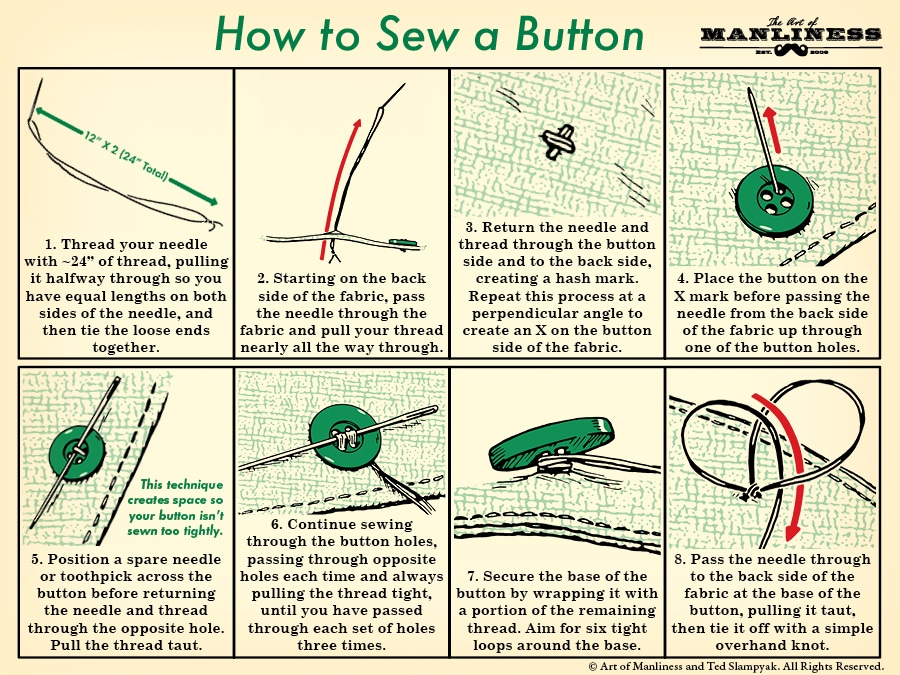
Stitching a button is a basic ability that may prevent from the frustration of dropping a button in your favourite shirt or pants. Whether or not you are a newbie or an skilled sewer, understanding the fundamentals of stitching a button could make all of the distinction in repairing a damaged button.
Selecting the Proper Thread and Needle Sort
In terms of stitching a button, choosing the proper thread and needle sort is essential. The kind of thread you utilize will rely upon the fabric of your button and the material of your garment. For instance, when you’re stitching a button onto a cotton shirt, you may need to use a cotton thread. Should you’re stitching a button onto a silk gown, you might need to use a silk thread.
The kind of needle you utilize can be essential. A pointy, skinny needle is finest for stitching small buttons, whereas a thicker needle is best for stitching bigger buttons.
Here is a desk illustrating the frequent thread varieties used for stitching buttons:
| Thread Sort | Cloth | Notes |
| — | — | — |
| Cotton thread | Cotton, linen, rayon | Good for many clothes |
| Silk thread | Silk, wool, blends | For delicate or stretchy materials |
| Nylon thread | Denim, canvas, outside materials | For heavy-duty stitching |
| Metallic thread | Elaborations, ornamental buttons | For including a contact of glamour |
The Function of Hand-Stitching and Machine-Stitching
Whereas machine-sewing is quicker and extra environment friendly, hand-sewing is commonly higher for stitching buttons. Hand-sewing permits for extra management and precision, which is very essential when stitching small buttons. Nonetheless, machine-sewing might be sooner and extra handy for stitching bigger buttons.
Strengthening and Weaknesses of Completely different Button Varieties, How you can sew on a button
There are a number of varieties of buttons, every with its personal strengths and weaknesses. Snap buttons, for instance, are simple to make use of and fast to stitch, however they will not be appropriate for delicate materials. Shirt buttons, then again, are nice for formal put on, however they will not be appropriate for athletic put on. Brooch buttons are lovely and attention-grabbing, however they will not be appropriate for on a regular basis put on.
When to Use Hand-Stitching and Machine-Stitching
Use hand-sewing for:
* Stitching small buttons onto delicate or stretchy materials
* Repairing damaged buttons on heirloom or classic clothes
* Creating ornamental or embellished buttons
Use machine-sewing for:
* Stitching massive buttons onto thick or heavy materials
* Repairing damaged buttons on canvas or denim
* Creating fast and environment friendly buttonholes
Further Ideas and Tips
When stitching a button, it is important to make use of small stitches and to stitch in a straight line. You must also use an identical thread shade to mix in with the remainder of the garment. Moreover, use a thimble or a tapestry needle to guard your fingers and to assist information the thread via the material.
Making ready the Button and Cloth for Restore

In terms of stitching on a button, preparation is essential. Earlier than you will get began, it’s good to be certain that your button and cloth are in the fitting place. This entails measuring the button and cloth, figuring out the thread shade, and slicing the thread.
Measuring the button is essential to make sure that it suits snugly on the material. To do that, place the button on the material and gently press it into place. Measure the gap between the button and the sting of the material to find out how a lot thread you may want. Ensure to bear in mind any seams or folds within the cloth which will have an effect on the button’s placement. rule of thumb is to go away a small margin between the button and the sting of the material to permit for straightforward stitching.
Figuring out the thread shade can be important to make sure a seamless mix with the material. Select a thread shade that matches the dominant shade of the material. If the material has a number of colours, think about using a thread shade that enhances the first shade. It is higher to err on the aspect of warning and select a thread shade that is barely darker or lighter than the material, as an ideal match could not all the time be doable.
Chopping the thread is a straightforward course of. Maintain the thread between your thumb and index finger, leaving a small loop on the finish. Reduce the thread about 1-2 inches from the loop. This provides you with sufficient thread to stitch the button onto the material with out leaving lots of extra.
Significance of Choosing the Appropriate Button Placement
Choosing the right button placement is crucial to create a balanced and aesthetically pleasing design. Think about the symmetry of the garment and the location of different buttons or elaborations. Place the button in a spot the place it will not hinder the material or intrude with any seams.
When working with clothes which have a number of buttons, it is important to think about the stability of the design. Attempt to distribute the buttons evenly, making an allowance for the scale, form, and placement of every button. This can create a visually interesting and well-balanced design.
Figuring out and Marking the Appropriate Button Place
Figuring out and marking the right button place is usually a problem, however with the fitting strategies, you’ll be able to guarantee correct placement. A method to do that is by utilizing pins to mark the spot the place you need to place the button. Gently press a pin into the material, taking care to not distort the material or push it too far.
Alternatively, you need to use momentary markers to mark the spot. These can be found at most craft shops and are available a wide range of colours. Merely apply the marker to the material, taking care to not smudge or rub it off. Ensure to check the marker on a small, inconspicuous space of the material first to make sure it would not go away any residue.
- Use a ruler or measuring tape to measure the gap between the button and the sting of the material. Ensure to bear in mind any seams or folds within the cloth.
- Determine the thread shade that matches the dominant shade of the material. Think about using a thread shade that enhances the first shade if the material has a number of colours.
- Reduce the thread about 1-2 inches from the loop, leaving sufficient thread to stitch the button onto the material with out extra.
- Place the button in a spot the place it will not hinder the material or intrude with any seams, making an allowance for the symmetry of the garment and the location of different buttons or elaborations.
- Use pins or momentary markers to mark the spot the place you need to place the button, taking care to not distort the material or push it too far.
- Do not assume the button is centered on the material. Measure the gap between the button and the sting of the material to make sure accuracy.
- Do not minimize the thread too lengthy, as this could trigger the button to shift throughout stitching.
- Do not place the button too near the sting of the material, as this could trigger it to pop off throughout put on.
Threading and Tying the Needle for Hand-Stitching
Threading and tying the needle is an important step in hand-sewing a button. It requires consideration to element and the fitting instruments to make sure a safe and even sew. Selecting the right thread sort and size is crucial to attain a professional-looking consequence.
When deciding on thread for hand-sewing, contemplate elements comparable to the colour, texture, and weight of the thread. For button-sewing, a skinny, light-weight thread is normally enough. Cotton or polyester threads are fashionable selections as a consequence of their sturdiness and ease of use.
Threading the Needle
To string the needle, comply with these steps:
- Maintain the thread between your thumb and index finger.
- Find the needle’s eye and place the thread on the opening.
- Utilizing your dominant hand, information the thread via the attention.
- Gently pull the thread to safe it in place.
- Repeat the method with the remaining thread size, making certain a easy and even thread.
Tying the Needle
To tie the needle securely, use a knot that can forestall the thread from coming unfastened throughout stitching. Some of the frequent knots used for hand-sewing is the Overhand Knot:
The
Overhand Knot
is a straightforward and efficient knot that’s broadly utilized in hand-sewing. To tie the Overhand Knot, comply with these steps:
- Maintain the needle with the thread in your non-dominant hand.
- Wrap the thread across the needle twice, forming a loop.
- Move the needle via the loop, securing the knot in place.
- Nudge the threads in the direction of the knot and tighten to create a safe knot.
- Trim the surplus thread, leaving a small tail to forestall fraying.
When tying the needle, it is important to make use of a thimble to guard your fingers from needle pricks and scrapes. Selecting the best dimension and sort of thimble is essential to make sure snug stitching.
Utilizing a Thimble
A thimble is an important device for hand-sewers, defending the fingers from needle pricks and scrapes. There are numerous varieties of thimbles obtainable, together with metallic, plastic, and leather-based.
Selecting the Proper Thimble Measurement and Sort
When deciding on a thimble, contemplate elements comparable to finger dimension and luxury. Metallic thimbles are sturdy and appropriate for many hand-sewing purposes, whereas plastic thimbles are light-weight and versatile.
When deciding on a thimble dimension, contemplate the size and width of your fingers. A thimble that’s too small or too massive could cause discomfort and hinder stitching.
Instance Hand-Stitching Sample
The operating sew is likely one of the commonest hand-sewing strategies used for stitching buttons. To stitch a button utilizing the operating sew, comply with these steps:
- Thread your needle and tie a safe knot.
- Deliver the needle up via the material, inserting it just under the button.
- Make a small sew, holding the thread taut.
- Insert the needle again down via the material, about 1/8 inch away from the primary sew.
- Proceed making operating stitches across the button, holding the thread taut.
The operating sew is a straightforward and efficient method for stitching buttons, requiring minimal thread and energy. Nonetheless, it may be time-consuming, and never very best for dense or thick materials.
When utilizing the operating sew, be certain that the stitches are evenly spaced and constant in size to attain a professional-looking consequence.
Utilizing a Stitching Machine to Connect a Button
Attaching a button utilizing a stitching machine is a fast and environment friendly method to restore or exchange a lacking button. This methodology is good for many who have expertise with stitching machines and need to save time.
To get began, you may want a couple of fundamental provides together with a stitching machine, a button of your alternative, and some threads to match your cloth. Earlier than you start, be certain that to pick the right cloth stabilizer and thread shade. The kind of cloth stabilizer you select will rely upon the kind of cloth you are working with. For instance, when you’re working with a fragile or slippery cloth, you might need to use a light-weight stabilizer to forestall the material from shifting or distorting through the stitching course of.
Selecting the Proper Stitching Machine Settings
Adjusting the stitching machine settings is essential to attaining optimum outcomes. The sew size and width could make a giant distinction within the closing consequence. A shorter sew size will end in a safer sew, whereas an extended sew size will create a extra ornamental sew. It is important to experiment with completely different settings to seek out what works finest to your cloth and button.
When deciding on the right sew, contemplate the kind of cloth you are working with and the general look you are attempting to attain. For instance, when you’re working with a thick or heavy cloth, you might need to use a zigzag sew to forestall the material from fraying. Should you’re going for a extra ornamental look, you might need to use a satin sew or an ornamental sew.
Frequent Errors and Corrections
Though stitching a button utilizing a stitching machine is comparatively simple, there are a couple of frequent errors to be careful for. Uneven stitching or cloth distortion can happen if the sew size or width is wrong. To appropriate this, attempt adjusting the sew size and width to seek out the optimum setting to your cloth and button.
One other frequent error is stitching the button on too tight or too unfastened. If the button is sewn on too tight, it might trigger the material to pucker or distort. If the button is sewn on too unfastened, it might come undone with time. To keep away from this, be certain that to stitch the button on with a constant stress.
| Stitching Machine Stitches | Description |
|---|---|
| Zigzag Sew | This sew is good for stitching buttons on thick or heavy materials. It creates a safe sew whereas stopping the material from fraying. |
| Satin Sew | This sew is ideal for creating an ornamental look. It creates a easy, even sew that is very best for stitching buttons on light-weight materials. |
| Ornamental Sew | This sew is nice for including a private contact to your stitching. It creates a novel and ornamental sew that is good for stitching buttons on specialty materials. |
| Straight Sew | This sew is good for stitching buttons on most materials. It creates a safe sew whereas stopping the material from distorting. |
Ending Remarks: How To Sew On A Button
In conclusion, stitching a button is a simple course of that requires persistence, observe, and the fitting instruments. By following the steps Artikeld on this information and avoiding frequent errors, you’ll sew on a button like a professional, saving you time, effort, and frustration in the long term. Joyful stitching!
Clarifying Questions
Q: What’s the finest thread to make use of for stitching a button?
A: The perfect thread to make use of for stitching a button is an identical thread shade that’s appropriate for the kind of cloth you’re working with. You possibly can select from a wide range of threads, together with cotton, polyester, or silk, relying in your desire and the feel of the material.
Q: How do I forestall my button from coming unfastened over time?
A: To stop your button from coming unfastened over time, be certain that to make use of a powerful thread and safe it tightly via the button and cloth. You may also use a couple of further stitches to bolster the world, particularly if the button is topic to heavy put on and tear.
Q: Can I take advantage of a stitching machine to stitch a button?
A: Sure, you need to use a stitching machine to stitch a button, particularly if you’re coping with a big button or lots of buttons. Nonetheless, for small buttons or intricate designs, hand-sewing is normally the higher choice.
Q: What’s the easiest way to safe a button that’s coming unfastened?
A: To safe a button that’s coming unfastened, you’ll be able to attempt re-sewing it with a stronger thread or utilizing a button reattachment package. If the button is totally indifferent, you might have to reattach it to the material utilizing a needle and thread.

